Solar Water Pumps vs Diesel Pumps: A Guide for Farmers in Uganda
Reliable water is essential for successful agriculture, particularly during Uganda’s dry seasons.
For many years, farmers have relied on diesel- and petrol-powered pumps to move water from boreholes, rivers, wells, and reservoirs to their farms.
Solar water pumping provides another option.
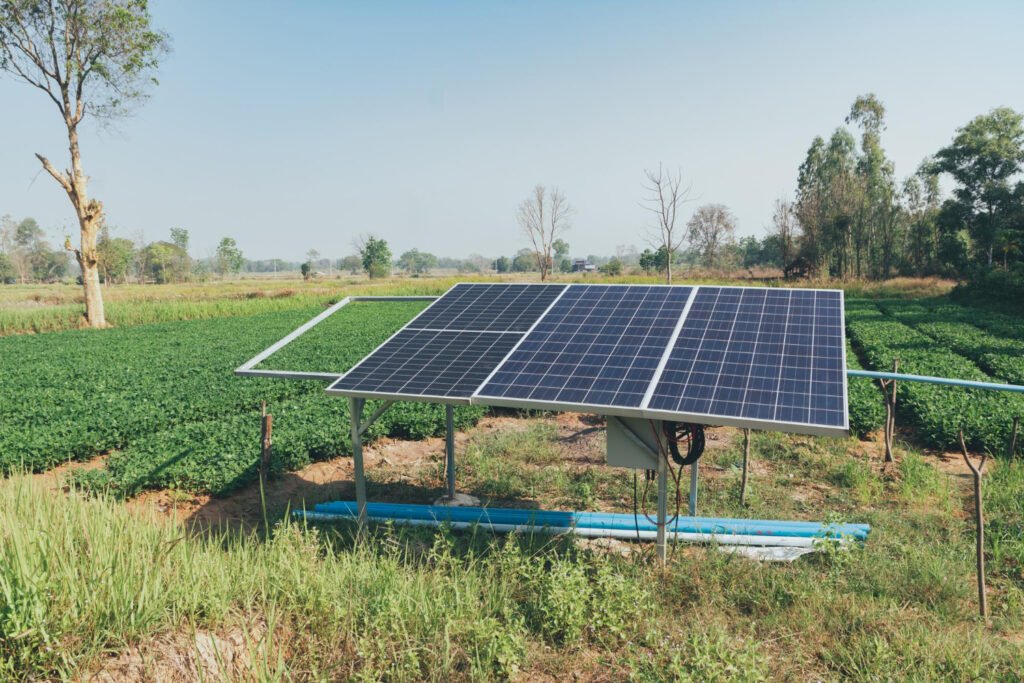
Instead of purchasing fuel to operate a combustion engine, a solar pumping system uses electricity generated by photovoltaic panels to power a water pump.
But how do the two technologies compare?
What Is a Solar Water Pump?
A solar water pump is a pump powered by electricity generated from solar panels.
A typical system may include:
- Solar panels
- Solar pump controller
- Water pump
- Mounting structure
- Pipes
- Storage tank
- Protection equipment
- Irrigation distribution system
The pump may be installed in a borehole, well or other suitable water source depending on the design.
What Is a Diesel Water Pump?
A diesel pump uses a diesel-powered combustion engine to operate a water pump.
The engine converts fuel energy into mechanical energy, which drives the pump.
Diesel pumps are widely used because they can operate independently of the electricity grid and can generally be started whenever fuel is available.
However, their operation requires regular fuel purchases and engine maintenance.
Solar vs Diesel: Operating Costs
One of the major differences is the source of operating energy.
A diesel pump requires fuel whenever it operates.
A solar pump uses sunlight as its energy source.
For farms that pump water frequently, eliminating routine fuel consumption can make solar pumping attractive over the long term.
A Makerere University study examining solar-powered irrigation in Uganda found that solar pumping could have lower energy-related costs than diesel alternatives in the irrigation schemes studied, although the economics varied by site and scale.
Maintenance Requirements
Diesel engines contain moving mechanical components that require routine servicing.
Typical maintenance can include:
- Engine oil changes
- Filter replacement
- Fuel-system maintenance
- Belt inspection
- Engine servicing
- Mechanical repairs
Solar pumping systems generally have fewer engine-related maintenance requirements because they do not use an internal-combustion engine.
However, solar systems still require maintenance.
This can include:
- Cleaning solar panels
- Inspecting cables
- Checking electrical connections
- Inspecting the pump
- Checking the controller
- Inspecting pipes and valves
- Monitoring system performance
Reliability
Both technologies can provide reliable water pumping when correctly designed and maintained.
However, their operating conditions are different.
A diesel pump can operate whenever it has sufficient fuel and is mechanically functional.
A solar pump depends on available solar energy and the design’s ability to meet the required water demand.
This makes system sizing extremely important.
Solar Pumps and Water Storage
One way to improve the reliability of solar pumping is to pump water into a storage tank or reservoir during periods of sunlight.
The stored water can then be used when irrigation is required.
This approach can reduce dependence on battery storage and allows the farm to treat water as the stored resource.
Modern solar irrigation design approaches commonly consider elevated water storage as an alternative to storing large quantities of electrical energy in batteries.
Environmental Considerations
Diesel engines produce exhaust emissions during operation.
Solar photovoltaic systems generate electricity without combustion during normal operation.
For agricultural projects seeking to reduce fuel dependence and operational emissions, solar pumping can therefore provide an alternative energy pathway.
Solar-powered irrigation has been highlighted in Uganda as a climate-resilience technology, particularly for farmers facing drought and unpredictable rainfall.
Initial Investment
One important consideration is the initial purchase and installation cost.
A solar pumping system may require investment in:
- Solar panels
- Pump
- Controller
- Mounting structure
- Electrical protection
- Water storage
- Pipes
- Installation
A diesel pump may have a lower initial equipment cost in some situations.
However, the comparison should not be based only on the purchase price.
Farmers should consider the total cost of ownership, including:
- Fuel
- Maintenance
- Repairs
- Replacement parts
- Electricity
- System lifespan
- Water requirements
Which System Is Suitable for Your Farm?
There is no universal answer.
Solar pumping may be particularly suitable when:
- The farm receives adequate sunlight
- Water pumping is required regularly
- The farm is far from the electricity grid
- Fuel transportation is expensive or inconvenient
- A suitable water source is available
- Long-term operating costs are important
- Water storage can be incorporated
Diesel may remain useful where:
- Pumping must occur at times when solar generation is unavailable
- Existing diesel infrastructure is already in place
- The site has unusual pumping requirements
- A backup pumping source is required
In some applications, a hybrid approach can also be considered.
How JRS Solar Solutions Can Help
Choosing the right pump requires more than simply selecting a pump with a particular horsepower rating.
JRS Solar Solutions can assess important parameters, including:
Water Source
Where is the water coming from?
Water Depth
How deep is the water level?
Required Flow Rate
How much water needs to be delivered within a specific period?
Pumping Head
How high must the water be lifted?
Distance
How far must the water travel from the source to the storage tank or farm?
Irrigation Method
Will the farm use:
- Drip irrigation?
- Sprinklers?
- Storage tanks?
- Gravity distribution?
- Pressurized irrigation?
Solar Resource
How much solar energy is available at the installation location?
These factors determine the appropriate pump, solar array, controller, and supporting infrastructure.
Why System Design Matters
An incorrectly sized solar pump may fail to deliver enough water.
For example, installing a pump without considering the required pumping head can result in poor water output.
Similarly, selecting solar panels without properly matching the pump and controller can reduce system performance.
Professional solar pumping design therefore begins with the water requirement and site conditions before selecting equipment.
The Future of Solar Irrigation in Uganda
Solar irrigation is increasingly being incorporated into agricultural and climate-resilience projects in Uganda.
Government-supported projects are deploying solar-powered water systems for irrigation and water supply, while development organizations are also working to expand access to solar pumping technology for farmers.
This reflects a growing interest in using renewable energy to support agricultural productivity and reduce dependence on fuel-based pumping.
Conclusion
Solar water pumps and diesel pumps each have their own applications, advantages, and limitations.
The right choice depends on the farm’s water requirements, location, budget, operating schedule, water source, and long-term objectives.
For farms with suitable solar conditions and regular pumping requirements, a properly designed solar pumping system can provide a practical alternative to fuel-powered pumping.
Need a Solar Water Pump?
JRS Solar Solutions provides solar water pumping and irrigation solutions designed for farms, irrigation schemes and other agricultural applications.
We can help with:
- Site assessment
- Solar pump sizing
- Solar panel installation
- Water pumping systems
- Irrigation systems
- Storage tanks
- System maintenance
- Solar system upgrades
Contact JRS Solar Solutions today and let us help you turn solar energy into reliable water for your farm.
JRS Solar Solutions — Powering a Brighter Future.